Mobile Dog Bathing That Keeps Pets Calm: Practical Tips for Nervous, Senior, and Special‑Needs Dogs
Stress‑free mobile dog bathing means bringing calm, safe grooming right to your pet’s familiar space so they experience less fear and more comfort. This guide walks you through real, mobile‑friendly techniques that reduce anxiety, protect seniors and special‑needs dogs, and include simple dental care tips owners can use between visits. Because many dogs are scared of travel, noise, and busy salons, a mobile groomer working one‑on‑one in your driveway removes those triggers and makes handling kinder and easier. You’ll find step‑by‑step desensitization plans, a clear look at calming aids, gentle bathing options for arthritic or elderly pets, and straightforward dental care guidance to keep your dog comfortable between appointments. Keywords like mobile dog bath anxiety relief, gentle grooming for nervous dogs, mobile pet grooming for arthritic dogs, and at‑home dog dental cleaning mobile are woven through the sections to help you find the right solutions for your pet.
Why Stress‑Free Mobile Dog Bathing Matters for Your Pet
Stress‑free mobile bathing focuses on reducing fear and physical strain by doing the whole bath in a dog’s own environment, using calm handling and purpose‑built equipment. The idea is simple: remove unfamiliar sights, sounds, and travel so your dog’s stress response stays lower and behavior stays manageable. The main benefits are safer handling, fewer stress‑related skin and behavior issues, and a better chance to spot health concerns during one‑on‑one care. Owners and groomers both see that calm dogs need less force, recover faster after sessions, and are more cooperative over time.
How Mobile Grooming Calms Dogs Compared with Traditional Salons
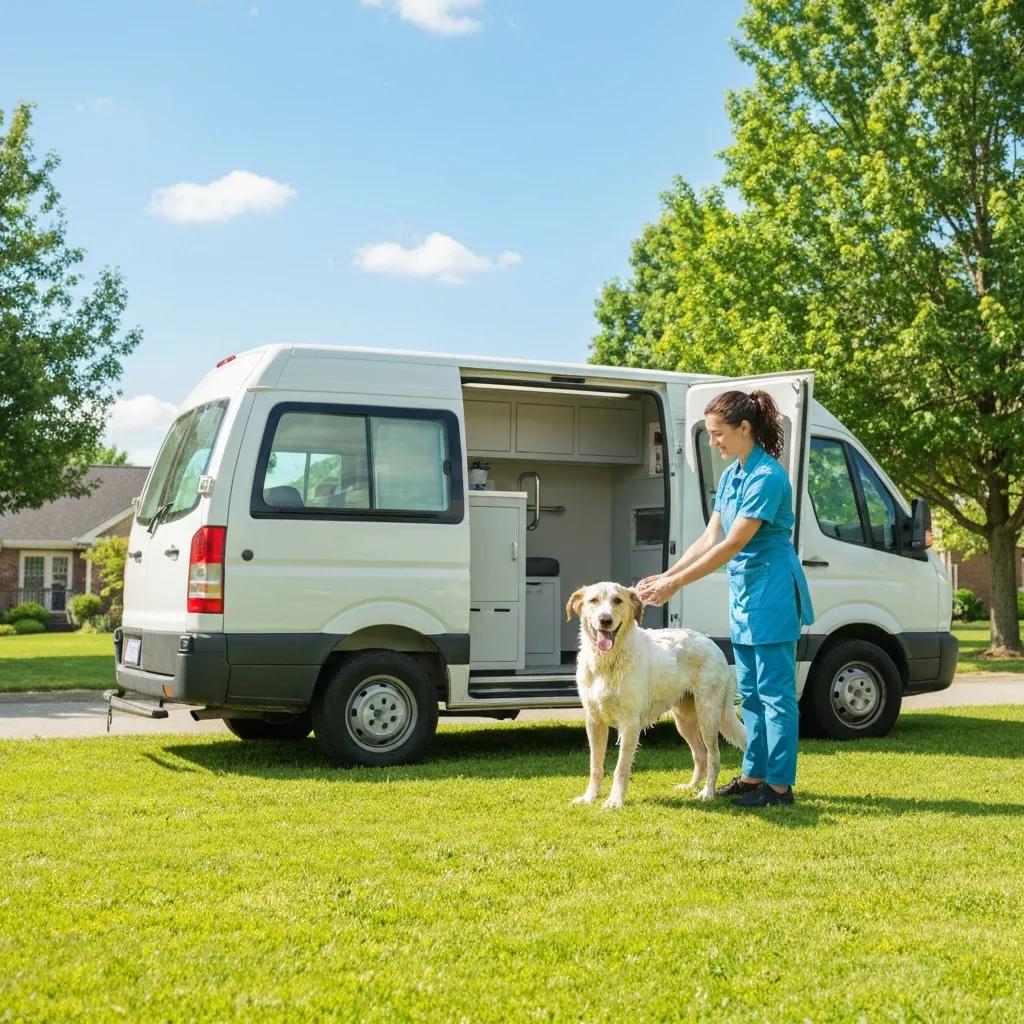
Mobile grooming cuts out car rides, waiting rooms, and kennels — all common anxiety triggers. Your dog skips a crowded salon with barking and loud equipment, and instead stays in familiar smells and surroundings that help them relax. One‑on‑one attention means the groomer can read body language, slow the pace, adjust water temperature, and change handling to fit your dog’s tolerance. Those small adjustments reduce startle responses and make visits predictable, which helps dogs behave better at future appointments.
Mobile Territory and Fear in Dogs: Understanding Canine Behavior
Some sources describe a dog’s mobile territory (for example, leash or owner proximity) as a comfort zone. When that zone is threatened, fear-related reactions can appear — a reminder that working within a dog’s familiar space often reduces stress.
What Sets Woof Woof Mobile Grooming Apart?
At Woof Woof Mobile Grooming we combine doorstep convenience with gentle, one‑on‑one care that puts your pet’s emotional and physical comfort first. Our routine uses low‑pressure showers, non‑slip surfaces, and warmed water, and we watch for small signs of distress so handling stays safe for anxious or older dogs. We also offer teeth brushing and basic dental checks as part of our service set, which helps keep hygiene complete and flags health issues early. That mix of convenience, attention, and dental focus makes mobile grooming a practical choice for ongoing pet wellness.
How to Calm an Anxious Dog During a Mobile Bath
Helping an anxious dog through a mobile bath starts with spotting stress signals, preparing them before we arrive, and using environmental tweaks plus positive reinforcement during the session. The approach is gradual exposure and association: soften or remove triggers, pair handling with predictable rewards, and use aids like pheromones or calming wraps when they fit the dog’s needs. The payoff is faster settling, fewer defensive reactions, and better results. Below are common signs to watch for, easy calming methods, and a short desensitization plan you can use between visits to speed comfort.
Common Signs Your Dog Is Anxious Before a Bath
Look for trembling, heavy panting, lip licking, avoidance, or whining as early signs of grooming anxiety — these usually grow worse if you push on. Wide eyes, a tucked tail, or pacing show the dog is nearing a threshold where handling could become difficult or unsafe. If you spot these cues, pause, offer a quiet break, use low‑intensity rewards, or reschedule that session rather than forcing the issue. Catching stress early helps keep visits positive and lets the groomer slow the pace or use targeted calming aids.
Which Calming Methods and Aids Work Best in a Mobile Bath?
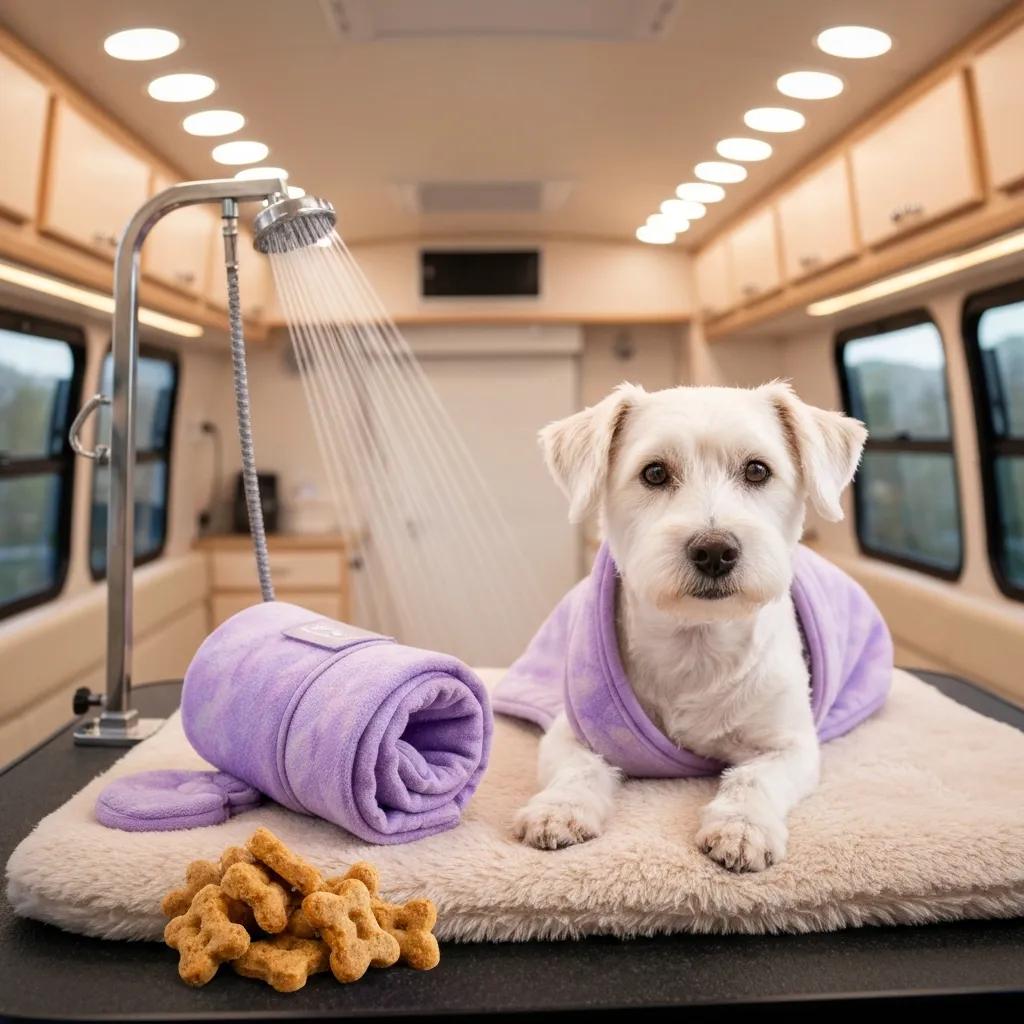
Used the right way, several tools help dogs settle in mobile baths. Low‑pressure showers and temperature control ease the shock of getting wet; calming wraps give comforting gentle pressure to anxious dogs; and short, very tasty treats reward calm behavior during transitions. Soft music and pheromone diffusers can gently lower arousal in the mobile unit, while one‑on‑one handling lets the groomer make quick adjustments. Note: always check medical considerations with the owner or vet before using aromatherapy or supplements.
- Intro: Below are common calming aids and why groomers pick them.
- Low‑pressure showers: Soften the sensation of getting wet and reduce startle.
- Calming wraps or shirts: Provide gentle, reassuring pressure for nervous dogs.
- Pheromone diffusers: Mimic comfort scents to help lower arousal.
- Short, high‑value treats: Reinforce calm behavior in the moment.
Summary: Choosing the right aid for your dog shortens bath time, improves comfort, and preserves safety and dignity.
Why Desensitizing Your Dog to Grooming Sounds Helps
Desensitization to grooming noises — clippers, dryers, and van sounds — works by slowly exposing the dog to low‑volume versions of those noises while pairing them with positive experiences. Start with a few quiet minutes at home every day, move closer only when the dog is calm, and increase volume gradually while rewarding relaxed behavior. Over 1–3 weeks, consistent, reward‑based practice usually lowers reactivity during real mobile sessions and speeds up on‑site settling. In short: predictability makes tools less scary.
| Calming Aid | Mechanism | Suitable For |
|---|---|---|
| Low-pressure shower | Gentle water flow that lessens sensory shock | Dogs startled by spray |
| Calming wrap | Deep‑pressure comfort to lower anxiety | Small to medium anxious dogs |
| Pheromone diffuser | Mimics soothing scent cues to reduce arousal | Dogs with situational stress |
| Music therapy (soft) | Masks sharp noises and promotes calm | Noise‑sensitive dogs |
| High-value treats | Instant positive reinforcement for calm behavior | All dogs during training |
This comparison helps owners and groomers match the right aid to common anxiety responses for a focused plan.
Gentle Bathing Methods for Senior and Special‑Needs Dogs

Gentle bathing for senior or special‑needs dogs means minimizing movement, using joint‑friendly handling, and keeping sessions short so the dog doesn’t tire. The goal is to support circulation and comfort while avoiding joint strain — warmed water, cushioned non‑slip surfaces, and sponge baths when full immersion isn’t suitable all help. Benefits include less pain during grooming, better skin care from suitable shampoos and conditioners, and safer transfers for dogs with mobility limits. Below we outline mobility adaptations and equipment choices that make mobile bathing safer and more comfortable for vulnerable pets.
How to Handle Mobility Challenges During Mobile Grooming
Practical adaptations make a big difference: ramps or low steps, harness‑assisted transfers, and shorter staged baths to avoid long standing periods. Groomers should assess whether a dog can step into the unit and use slings or two‑person lifts only with owner consent and proper safety checks — otherwise a seated sponge bath is often the kinder option. Owners can help by clearing a steady access path and having a favorite towel or bed close by to encourage the dog to move voluntarily. These steps reduce fall risk and keep your dog comfortable through the session.
| Technique | Attribute | Best-for (Value) |
|---|---|---|
| Ramp entry | Makes getting in and out easier | Dogs with hip dysplasia or arthritis |
| Harness-assisted lift | Safe transfer without neck strain | Larger dogs with weakness |
| Seated sponge bath | Minimizes standing and fatigue | Frail, very elderly, or post‑op dogs |
| Short, staged sessions | Prevents over‑tiring | Dogs who tire quickly |
| Padded support mat | Reduces pressure on sore spots | Dogs with thin skin or joint pain |
Summary: Tailoring technique to your dog’s mobility cuts stress, avoids injury, and delivers a dignified, effective clean.
Equipment and Handling That Keep Senior Dogs Comfortable
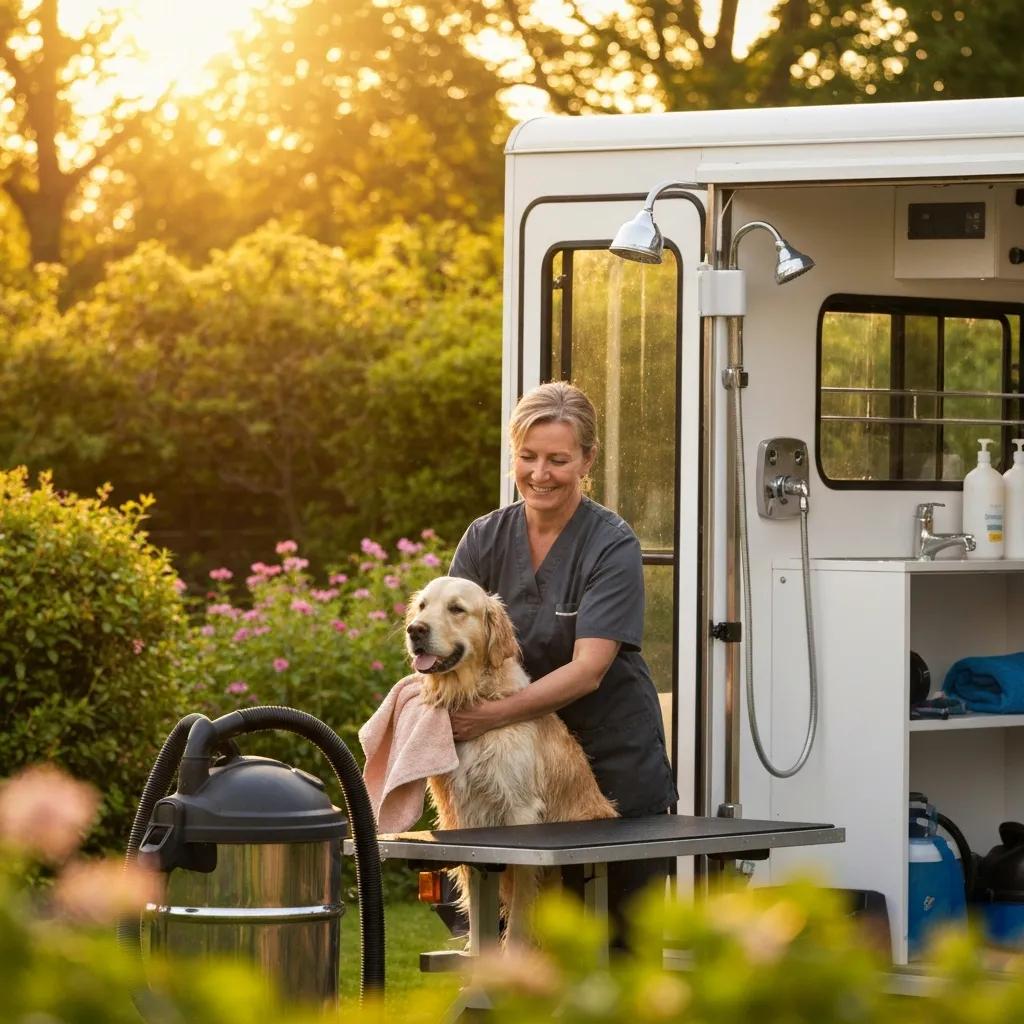
Key gear — non‑slip mats, padded supports, warmed water systems, and low‑reach fixtures — prevents slips and spreads pressure away from painful joints so grooming finishes with minimal distress. Handling tips include supporting the chest during lifts, using towels for gentle restraint, and keeping sessions brief. Prioritize high‑grip surfaces, adjustable ramp angles, and reliable temperature control to avoid chilling or overheating. Groomers trained in low‑stress handling can spot subtle pain signals and pause or adapt procedures, which helps with long‑term cooperation and skin health.
Senior Dog Care: Importance of Drying Ears After Bathing
Drying your dog’s ears well after a bath helps prevent moisture‑related problems and keeps older dogs more comfortable.
Why Mobile Pet Dental Care Matters for Whole‑Body Health
Oral care relates directly to overall health, and mobile dental checks make brushing and inspections easier without adding travel stress. Regular brushing and routine checks reduce mouth bacteria, slow plaque and tartar buildup, and lower the chance of bacteria reaching other organs. Benefits include fresher breath, less oral pain, fewer lost teeth, and reduced risk of systemic inflammation. Adding dental checks to mobile grooming visits gives owners practical at‑home routines and timely advice to pursue veterinary dental care if needed.
Why Regular Brushing During Mobile Visits Helps
Regular tooth brushing removes daily plaque, slows tartar formation, and eases gum inflammation — all of which reduce oral pain and make eating more comfortable. When groomers include basic brushing during a mobile visit, owners get hands‑on demos of proper technique and tailored product suggestions for their dog’s tolerance. Preventative brushing also shortens future professional cleanings by limiting severe buildup and can expose early signs of dental disease that need a vet’s attention.
| Dental Task | Attribute | Recommended Frequency |
|---|---|---|
| Basic teeth brushing | Removes daily plaque | Daily or every other day |
| Oral inspection (by groomer) | Quick visual check for redness or swelling | Each mobile grooming visit |
| Professional dental cleaning (vet) | Removes heavy tartar under anesthesia | As advised by vet (typically annual or as needed) |
| Dental chews (supplemental) | Helps mechanically reduce plaque | Several times weekly |
| Training to accept brushing | Gradual desensitization | Short daily sessions until routine |
Summary: Combining simple at‑home care with mobile professional checks lowers oral disease risk and keeps your pet more comfortable.
Integration note: Woof Woof Mobile Grooming includes basic teeth brushing and dental care in its mobile services and focuses on teaching owners the right techniques, spotting warning signs, and recommending follow‑up veterinary care when needed. Highlighting dental health alongside bathing builds trust and gives clear next steps for owners who want to keep their pet’s mouth healthy between visits.
How Owners Can Keep Their Dog’s Teeth Healthy Between Visits
Start a short, calm brushing routine using a dog‑specific toothbrush and toothpaste, and add supportive measures like dental chews and periodic checks of the mouth. Begin by gently rubbing the gums with your finger or gauze for a week, then introduce the toothbrush for a few seconds daily, gradually lengthening the time while rewarding calm behavior. Watch for persistent bad breath, drooling, or trouble eating — those signs mean it’s time for a professional check. Regular, gentle at‑home care lowers the need for extensive in‑clinic cleanings and keeps pets more comfortable long term.
How Mobile Grooming Helps Busy Owners — and Their Pets
Mobile grooming saves time, removes travel hassles, and brings professional care to your doorstep so pets face fewer stressful environments. The system is logistics plus focused attention: owners keep their schedule while dogs avoid transit anxiety. This setup is especially helpful for working families, older owners, or homes with multiple pets where transporting animals is difficult. The result is more consistent grooming, better hygiene, and fewer missed appointments.
Practical Convenience Perks of Mobile Grooming
Mobile grooming eliminates car rides and waiting rooms, offers flexible appointment windows that fit busy days, and often shortens overall time because services are handled by one technician on site. Doorstep service reduces exposure to contagious conditions found in crowded salons and makes routine grooming easier to maintain for owners with limited mobility or unpredictable schedules.
Convenience advantages include:
- Doorstep service: No travel or drop‑off needed.
- Flexible scheduling: Appointments that work around your day.
- Shorter total time commitment: Less time spent in transit and waiting.
Summary: These practical perks support regular grooming and better pet welfare through consistent, low‑stress care.
How One‑on‑One Attention Improves Results
One‑on‑one care lets groomers watch a dog the whole time, adjust handling to stress signals, and share clear health observations — like skin changes, lumps, or dental concerns — directly with you. Focused attention reduces missed spots and over‑handling, and it creates room to pick products that suit sensitive skin or coat types. Personalized care usually means healthier coats, fewer behavior problems during grooming, and better owner guidance for at‑home maintenance. The result: a smoother grooming routine and a stronger partnership between you and your groomer.
How to Prepare Your Dog for a Calm Mobile Grooming Visit
Preparing your dog ahead of time lowers on‑site anxiety and speeds up the session by addressing physical readiness and mental familiarity. Think energy management, tool exposure, and a tidy access area: exercise to burn excess energy, a quick brush to remove loose hair, and a calm, clear space for the mobile unit to park. These steps help your dog settle faster, reduce stress responses, and keep the session moving smoothly. Below are practical pre‑visit steps and short familiarization exercises that ease the transition to mobile grooming.
Pre‑Bath Exercise and Brushing That Help
A brisk 10–20 minute walk or short play session burns extra energy and makes dogs more open to handling. Follow with light brushing to catch loose hair and tangles — that short prep cuts bath time and reduces discomfort when wetting. Aim to exercise 30–60 minutes before the groomer arrives so your dog has time to rest and scent their space. These simple steps lower arousal and make grooming smoother for everyone.
How Familiarity with Tools Reduces Anxiety
Introduce grooming tools slowly over 1–2 weeks: let your dog sniff a damp brush, play low‑volume dryer sounds from a distance, and give treats near grooming areas so tools feel safe. Keep sessions short and reward calm behavior to build positive associations. Milestones include tolerance of touch, short brushing, and calmness around low‑volume noise; once the dog reaches those points, they’re usually much calmer during the mobile visit. If progress stalls, a trainer or behaviorist can help with a tailored desensitization plan.
For owners who want personalized guidance or to book a grooming session that includes dental checks and an anxiety‑reduction plan, Woof Woof Mobile Grooming in McKinney, TX offers stress‑focused bathing and teeth brushing as part of our mobile visits. Our information‑first approach teaches owners, builds trust through one‑on‑one care, and helps you schedule follow‑ups to keep your dog comfortable between appointments.
Frequently Asked Questions
What should I do if my dog is still anxious during mobile grooming sessions?
If your dog is still anxious, start a gentle desensitization plan: introduce tools and sounds slowly at home and reward calm moments. Consider a professional trainer for a tailored plan, and talk with your groomer so they can modify their approach. Calming aids like pheromone diffusers or wraps can help during sessions — always check with your vet if you’re unsure about any product.
How can I ensure my dog is comfortable during the grooming process?
Create a familiar, calm setup: non‑slip mats, warm water, short focused sessions, and regular breaks help a lot — especially for seniors or special‑needs dogs. Gentle handling and introducing tools ahead of time with positive rewards will improve comfort and cooperation.
What are the signs that my dog may need dental care?
Watch for persistent bad breath, swollen or bleeding gums, trouble eating, or excess drooling. Visible tartar or behavior changes like avoiding chew toys can also signal dental issues. Regular checks during mobile grooming help catch problems early so you can get veterinary care when needed.
How often should I schedule mobile grooming for my dog?
Frequency depends on breed, coat type, and your dog’s needs. Long or dense coats often need grooming every 4–6 weeks; short coats may be fine every 8–12 weeks. Regular appointments keep skin and coat healthy, reduce shedding, and help catch any skin or health concerns early.
Can mobile grooming accommodate dogs with special needs?
Yes. Mobile grooming is especially helpful for seniors or dogs with mobility challenges. Groomers trained in low‑stress handling adapt methods and equipment — ramps, gentle support, and seated sponge baths — to keep your dog safe and comfortable. Share your dog’s needs ahead of time so we can prepare.
What should I do if my dog has a medical condition that affects grooming?
Tell your groomer about any medical issues before the appointment so they can adjust techniques and products. Dogs with skin sensitivities may need hypoallergenic shampoos; those with mobility problems may need extra support. Always follow your vet’s advice on safe grooming practices for specific conditions.
How can I maintain my dog’s grooming routine between mobile visits?
Keep a simple at‑home routine: regular brushing to prevent mats, ear checks, and basic dental care like short brushing sessions. Consistent exercise and mental stimulation also help your dog stay calm for grooming. Regular, small habits will make professional visits quicker and easier.
Conclusion
Mobile dog bathing done with care reduces anxiety and protects your pet’s comfort, especially for nervous, senior, or special‑needs dogs. Prioritizing gentle handling and familiar surroundings makes grooming safer and less stressful. If you want a calm, convenient grooming experience that includes dental care and personalized attention, schedule a visit with Woof Woof Mobile Grooming — we’ll help you and your dog feel confident and comfortable every step of the way.